


Artificial Intelligence (AI) is in its infancy, yet it is already beginning to displace long established careers, vocations and passions. These are domains through which so many of us make a living and derive meaning from life. For many of us, our personal and social value is quantified by our productivity and usefulness. The very possibility that this displacement may arrive is enough to induce a feeling of anxiety, but as you will discover, there is far more to a meaningful existence than what we output.
In this article you will discover more about the rich and diverse sources available for living a fulfilling and meaningful life, whatever the impact AI and automation will have.
When the Ground of Meaning Starts to Shift
It is not uncommon to feel uneasy when your familiar ways of living and working show signs of being significantly disrupted.
It may not be sufficiently abrupt to call it panic, or close enough to categorise as depression. Rather it might feel like a slow dissolution of certainty. You might find yourself asking:
- Where do I fit if machines can do what I do?
- What value do I have to give if productivity is decreasingly human?
- Who am I, beyond what I do?
Maybe you are concerned about the uncertainty of the unfolding digital age. Perhaps you are uncertain about your identity and purpose in this future, or plagued by worst case scenarios about a post-labour world and obsolescence. If so, what you are feeling is existential anxiety, in light of the realities of, and speculation about AI and automation.
In this article we explore what may be happening psychologically, and how you might use this moment as a platform to engage with a deeper meaning about what it is to be you and the value you hold.
What Is Existential Anxiety in the Context of AI and Automation?

“The existential problem that we are faced with… can be framed as follows: Now that we can do anything; what will we do?” – Matrise
Existential anxiety describes the distress that comes when you struggle to find certainty about fundamental layers of existence, such as:
- Meaning
- Identity
- Mortality
- Freedom
- Belonging
Technology can radically reshape the world and our places within it, as we are seeing with the advancement of AI. Alvin Toffler’s ‘future shock’ is a term which seems to encapsulate humanity’s ill-preparedness for this advancement.
“Future shock is the shattering stress and disorientation that we induce in individuals by subjecting them to too much change in too short a time.” Alvin Toffler
Distinguishing AI-Related Existential Anxiety from General Anxiety
General anxiety is characterised by extensive and affective worrying in reference to the future. When this anxiety is related to AI growth and obsolescence through automation, the content of these worries becomes existential in nature. The grounding on which work and life sits can seem fragmented, or atomised. There may be little that is familiar to grasp. In this scenario it would be understandable if you had questions about human value, lack of meaning and loss of identity.
Fear of Obsolescence and Post-Labour Identity

Identity Tied to Productivity
Chances are you have grown up in a culture which places a high level of value on output. What have you done, accomplished, or demonstrated? What have you produced? ‘Output’ relates to a service you might provide, as much as it might to a thing you might create – the fruit of your labours. The achievement of your output may have always been an important part of what makes you ‘you’. Without it you may feel unmoored.
Sociological and psychological research suggests that work brings with it structure, identity, and meaning and its disruption can bring with it psychological distress.
Technological displacement stress
You have a meaningful place in the world, in a large part, because you are, or have been productive. It is an important drive that has paved the development and expansion of human society and culture.
The anxiety you might feel from the threat of automation is not just about job insecurity and economic instability, but the diminished need for human effort.
There is of course huge debate about this, but the debate tends not so much about ‘if’ AI will replace human labour, it is about ‘how much’ and ‘how long’ it will be until your role is replaced. Most seem to agree that some jobs will still remain and many say that we may have the option of working, but without the genuine need. The genuine need for work is an important factor… mattering is crucial.
Meaning Through Agency Plus Meaning Through Mattering
Choosing to make an effort towards something, is empowering, because it activates a sense of agency, which can activate human growth and flourishing. Mattering to others prevents us from feeling insignificant and helps us feel that we belong. When both agency and mattering overlap you get prosocial meaning – a choice to apply effort to something, because it matters. This is a potent blend of meaning that is more than the sum of its parts. This is not only well supported psychologically, it is intuitively evident.
Meaning and Relationship

It is clear that what we do and for whom can be a source of life meaning, but the workplace is more than just an engine of productivity – it is often a domain of social connection and relationality.
A meaningful life is rooted not only within individuals, but between people. Social connection brings warmth and belonging, as well as a sand box for developing thought and emotion. Meaning is given, received, borrowed, observed and more. It is shaped in relationship.
Identity too and the blueprints for our social attachments are forged in the relational connectivity between yourself and those you spend time with.
It is not just interacting with others that brings meaning to life, it is the quality and depth of connection, fuelled by conscious presence and empathy. You may have relatively few friends and family members, but the relational richness of these relationships might bring meaning that a thousand shallow relationships just can’t match. When you share your presence with others you indicate that you have time for them and they reciprocate with time for you. This would only happen if you felt they were significant and they felt you were significant.
The kind of relationship you share with a therapist, while conducted with professionalism and different to friendships, is underpinned by deep empathy and conscious presence. Relationships such as these teach us how to perpetuate other deeply meaningful relationships throughout our lives and are key drivers for psychological change.
Relationality is essential for wellbeing, longevity and a meaningful life.
Worth as Intrinsic Rather Than Earned

Worth is intimately connected to meaning. When you mean something to someone and yourself, you nurture deep worth and intrinsic value.
Let’s be real, a portion of this value will always be transactional – “you are worth something to me because you provide something that fulfils me”. There is nothing wrong with that as an extrinsic motivation. However, if the pursuit of value through transaction is the central source of value in your life, you may find yourself performing, or signalling from a position of insecurity. This is high effort and low reward.
When your baseline is your intrinsic and unconditional value, “you are meaningful and valuable” is a starting point, not a goal. Then you stop searching for meaning and significance, and instead, it finds you.
Intrinsic self-value is something which can be initiated in a quality therapeutic relationship. Many think of therapy as being about ‘fixing’ problems of the mind, but it isn’t (at least through most approaches). You are not broken, you are exactly how you are meant to be and no matter what you have done and what you will do you are worthwhile. Your therapist models this in the therapeutic relationship, helping you to naturally relearn this about yourself.
Identity as Process Rather Than Product
The sense of wholeness that comes with intrinsic self-value does not mean that you don’t evolve and grow – you can be guaranteed that you will. Your self, your identity is not fixed, it is a process. Transformation is your natural state.
So if identity is a process and identity is the bundle of meaning which we apply to ourselves, meaning must be a process too. The meaning you distil in a world of AI and automation, or in any world, should not be thought of as a destination, but an endlessly unfurling path of curiosity.
Discover Your Post-Labour Meaningfulness, However Realistic a Post-Labour World May be
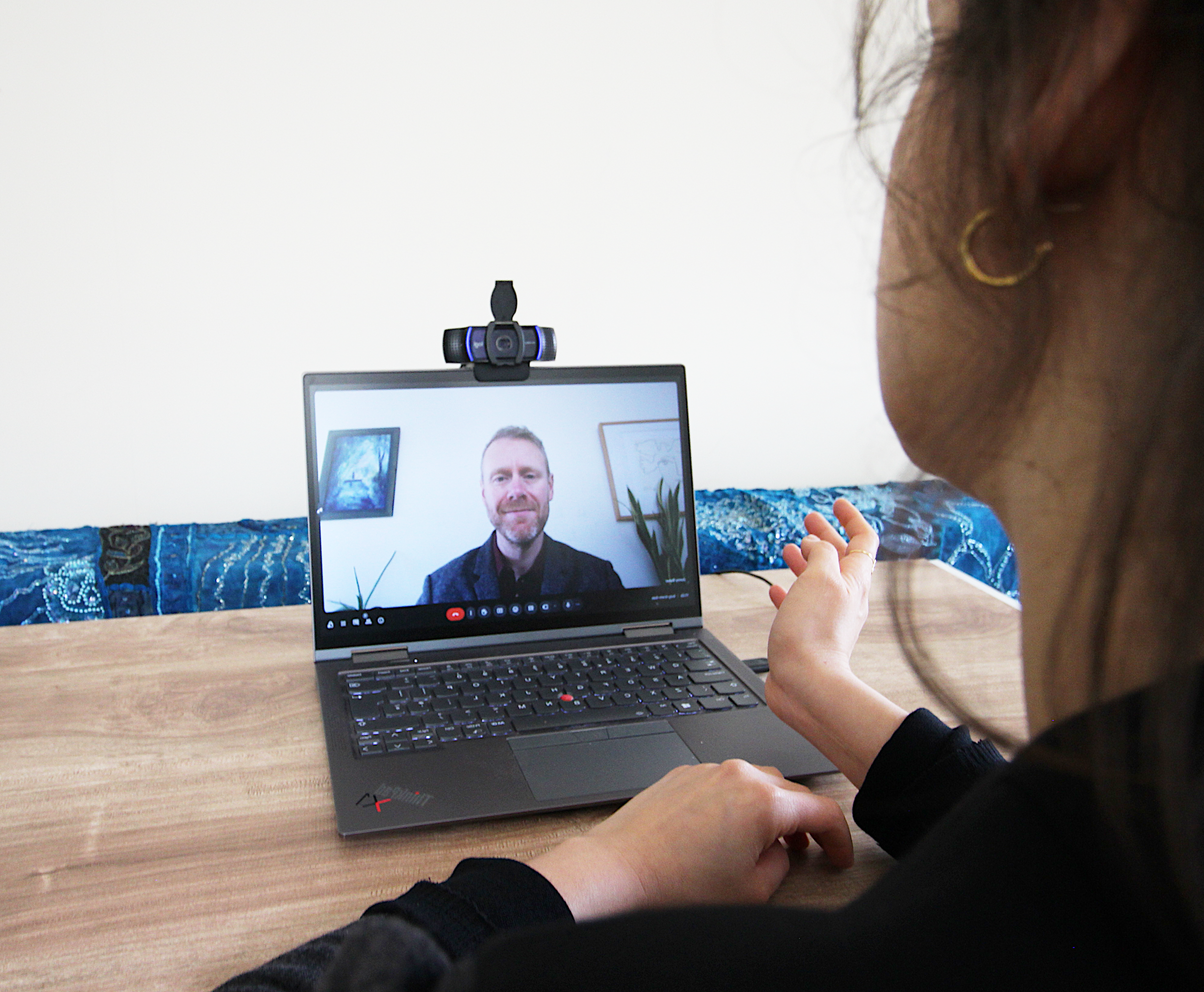
In the face of a breakdown of purpose and meaning, it can help to delve deeply into the origins of your values and identity. This can help you learn more about how you already structure your efforts to gain approval and from whom. During this quest you can find new possibilities to operationalise your autonomy and mattering, as well as to uncover an unconditional self-value that transcends your efforts.
Both within and outside the context of AI and automation, it is revealing and empowering to trace your purposefulness to its roots. You can reveal the value that you represent in your relationships, the value you reap from your experience of living and your spiritual value (if you are spiritually inclined). This can help you to live from a baseline of contentment and to direct your journey through life in a way that is fulfilling to you and your people.
The key to new meaning is on the inside, before it is external, it is in the transformation to your experience of living.
Practical Strategies You Can Experiment With
These are not replacements for therapy, but they may offer a starting point.
1. Separate Worth from Output
Practice:
- Write two lists:
- “What I produce”
- “What I am, without producing”
Rationale:
Helps disentangle identity from productivity – an important step in reducing extrinsic self-worth dependency.
Not sufficient alone if feelings of worthlessness are persistent or severe.
2. Meaning Mapping
Practice:
Identify 3 moments in the past week that felt meaningful.
Ask:
- What was happening?
- Who was involved?
- What felt significant?
Rationale:
Research shows meaning is often constructed through experience and reflection, not abstract thinking alone.
3. Controlled Exposure to AI Anxiety
Practice:
- Limit exposure to AI-related media to defined periods
- Notice emotional responses
Rationale:
Reduces reliance on AI and activation of technological displacement stress.
4. Re-engage Embodied Experience
Practice:
- Walking
- Engage in sensory awareness – what can you see, hear, feel, taste, smell?
- Physical grounding
Rationale:
Existential anxiety often pulls attention into abstraction. Embodiment restores balance.
5. Dialogue with the “Future Self”
Practice:
Write from the perspective of yourself 10 years ahead:
- What mattered?
- What did not?
Rationale:
Encourages long-term meaning orientation over short-term fear.
When Self-Help Isn’t Enough
You might consider therapy if:
- Anxiety about AI or the future feels persistent
- Your sense of identity feels unstable or unclear
- There is a loss of meaning or direction
- Patterns repeat despite reflection
- Existential questions feel overwhelming rather than curious
How Online Therapy for Anxiety and Life Meaning Challenges Can Help
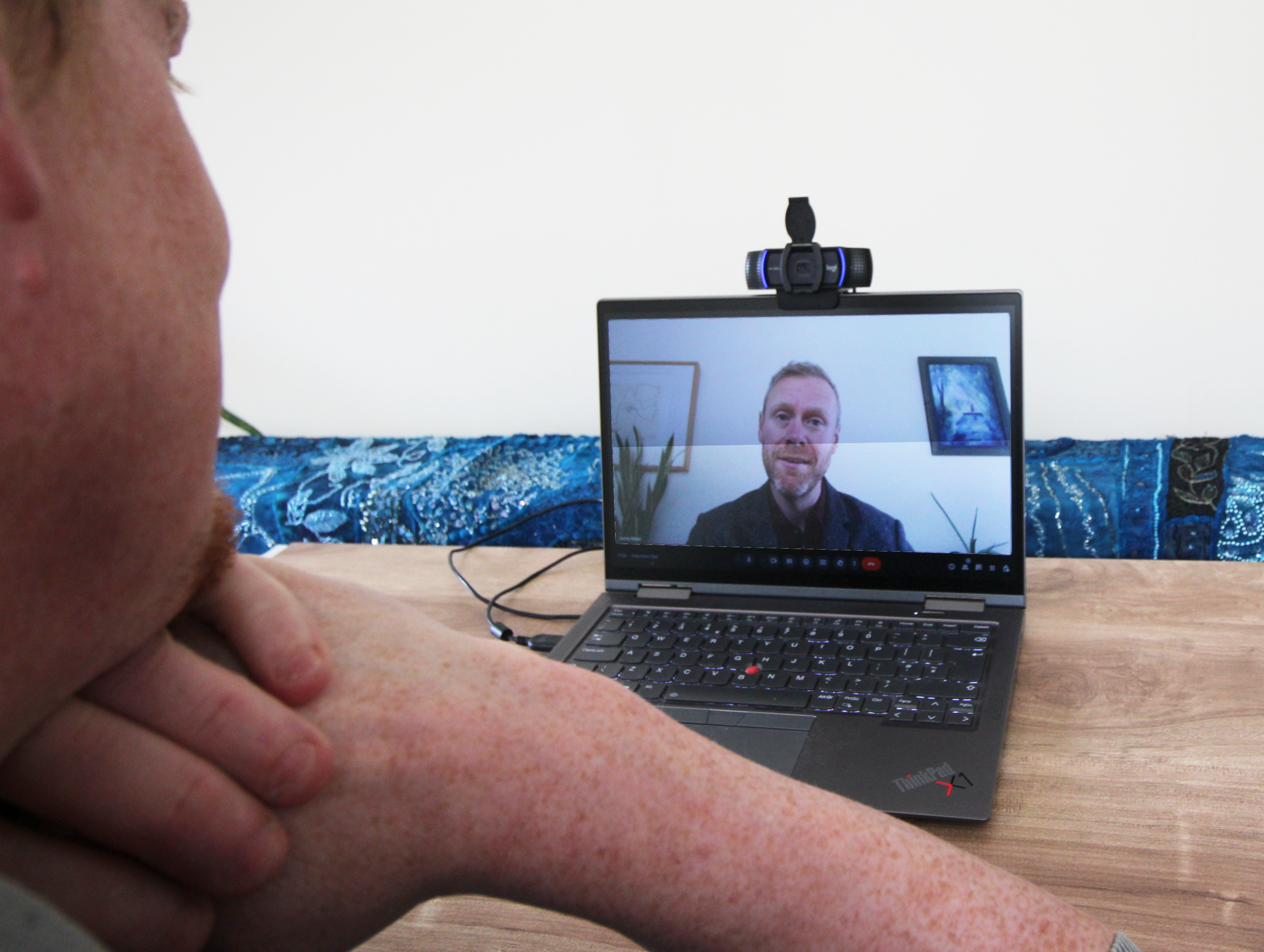
An integrative therapeutic approach may involve:
- Exploring identity beyond productivity
- Working with existential themes safely
- Integrating emotional, cognitive, and philosophical perspectives
- Reconnecting with deeper values and meaning
Online therapy can offer:
- Accessibility
- Continuity
- A reflective space removed from immediate pressures
The aim is not to remove uncertainty, but to help you relate to it differently.