

When the Fear Is Hard to Name
You might feel a persistent unease that is difficult to explain. This can show up as health worries, panic, a sense of unreality, or a nagging question about meaning. You might avoid certain conversations, news, or quiet moments because they bring you face to face with something uncomfortable: the lingering awareness that life is finite.
How do you feel when you reflect on the possibility that you might one day not exist? How do you feel when you consider how it might be to exist, but remember nothing of your current existence? What comes up for you when you consider that there is no way to conclusively know that you exist at all?
For many people, this is existential death anxiety – a deeply human response to recognising mortality and the uncertainty of non-existence. While universal, this fear can become overwhelming, shaping behaviour, relationships, and mental health in ways that are exhausting and isolating.
The fear of death is, perhaps, the mother of all fears. To be anxious about death is to anticipate that you, or someone you care about, will cease to exist and that there is a high degree of uncertainty as to what happens next, if anything. Where do you go for help?
Healing Existential Death Anxiety does not mean removing awareness of mortality. It means changing your relationship to it so that life can feel steadier, more meaningful, and less governed by fear.
What Is Existential Death Anxiety?

Existential death anxiety involves recurring distress linked to an awareness of mortality and the uncertainty surrounding non-existence. If your fear is persistent, disproportionate to genuine danger, or significantly impacts your day to day life, you may wish to seek professional help, such as talking therapy.
It is not classified as a condition in its own right, but is recognised across psychology as an underlying driver of several anxiety types:
- It may appear as health anxiety, panic episodes, obsessive checking, or avoidance
- It may present as existential dread, loss of meaning, or spiritual crisis
- It often sits beneath phobias, OCD patterns, or trauma responses
The concept is grounded in terror management theory and existential psychology.
Only a medical professional can categorically verify whether you have death anxiety, or not (to learn more about psychological professionals check out this post). If they do, it may be identified as a feature of another condition, as mentioned above. A therapist, on the other hand, helps you to work with your experience of symptoms of death anxiety – you are the expert of what it is like to feel the way you feel and live the way you live. In therapy, your discoveries and psychological growth predominantly come from within you.
Common Signs That Mortality Fear May Be Driving Your Anxiety
You may notice:
- Hyper-focus on bodily sensations or illness
- Avoidance of ageing, illness, or loss-related topics
- Panic that seems to “come from nowhere”
- Feeling detached, unreal, or existentially lost
- Difficulty experiencing joy or meaning
- Compulsive reassurance seeking
- Oscillation between healthcare avoidance and over-checking
These patterns are often attempts to manage an unspoken fear rather than the true issue itself.
Why This Fear Can Also Become a Source of Meaning

Existential psychology proposes something counter-intuitive: when safely approached, awareness of mortality can deepen appreciation of life. This may be challenging to compute, as fear tells us to avoid engagement at all costs. It tells us that awareness of death can only bring more of what we don’t want to feel, without ever testing this theory.
Facing this fear with guidance often leads to:
- Greater authenticity
- Re-evaluation of priorities
- Increased compassion
- Stronger sense of purpose
Practical Strategies You Can Experiment With
These are supportive practices, not replacements for therapy.
1. Mortality Awareness Journaling
Instructions: Write for 10 minutes about what feels important if life were limited.
Rationale: Shifts focus from fear to values
2. Gentle Exposure to Avoided Topics
Instructions: Read or watch material that touches on ageing or end-of-life themes in small doses.
Rationale: Reduces avoidance cycles
3. Meaning Mapping
Instructions: List where you currently derive meaning (e.g. relationships, creativity, service).
Rationale: Life meaning highlights what is important about being alive
4. Grounding in Present Experience
Instructions: Name five visible objects, feel both feet on the floor, slow your breathing.
Rationale: Counters dissociation and existential drift nd reduces activation of your sympathetic nervous system.
When Self-Help Isn’t Enough
Consider therapy when:
- Symptoms persist despite insight
- Avoidance shapes daily life
- Panic, OCD, or health anxiety dominates
- You want deeper exploration of meaning and fear
- You feel isolated with these thoughts
How Online Integrative Therapy for Death Anxiety Can Help
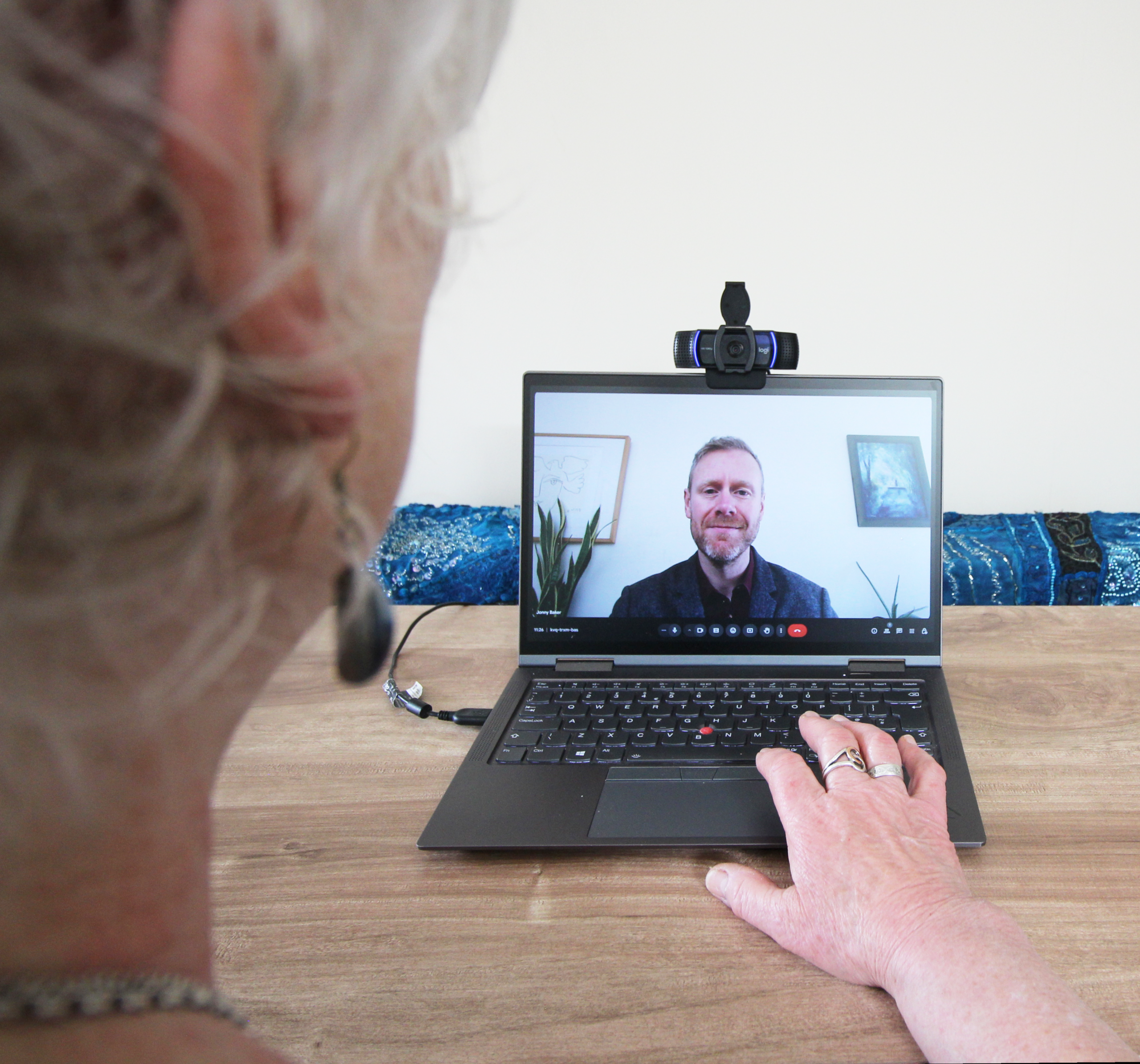
An integrative approach to therapy allows the work to occur at multiple levels Take, for example, my approach, which integrates hypno-therapy with person-centred, exposure, existential, schema and transpersonal therapy:
| Approach | Contribution |
| Person-centred | Safety, trust, relational depth |
| Hypnotherapy | Access to subconscious fear structures |
| Exposure & CBT | Reduction of avoidance and panic loops |
| Existential therapy | Reframing mortality as a source of meaning |
| Schema therapy | Healing early vulnerability patterns |
| Transpersonal | Exploring self-transcendence and spiritual meaning |
Conducting therapy online is not only as effective as in-person therapy, it provides accessibility and continuity from your own environment, which is often important when working with anxiety patterns.
FAQs
You are right, it is natural to fear death to an extent, but normal awareness can become problematic and normal life can become challenging when your fear drives avoidance, panic, or compulsions.
Evidence shows hypnosis can access and reduce pre-conscious signals that other talk therapy may not reach alone.
Health vigilance is often a reactive attempt to control mortality fear.
Yes, when paced and guided. Poorly timed exposure can increase distress.